

 By Mr.Sun
A contour pillow has a deliberately shaped surface, often with raised edges and a lower central area. A traditional pillow generally has a more even or gently rounded profile. That difference affects how you position the pillow and how easily you can reshape it, but it does not make either format universally better.
What the shape changes
A shaped pillow gives you a defined place to rest your head and a repeatable edge profile. This can make the setup predictable when you prefer a particular orientation. It can also feel restrictive if you like to turn, fold or move your pillow frequently.
A traditional loose-fill pillow may be easier to fluff or redistribute. A rectangular solid-foam pillow, however, behaves differently from a loose-fill one even though both look traditional. Separate the external shape from the internal construction when comparing listings.
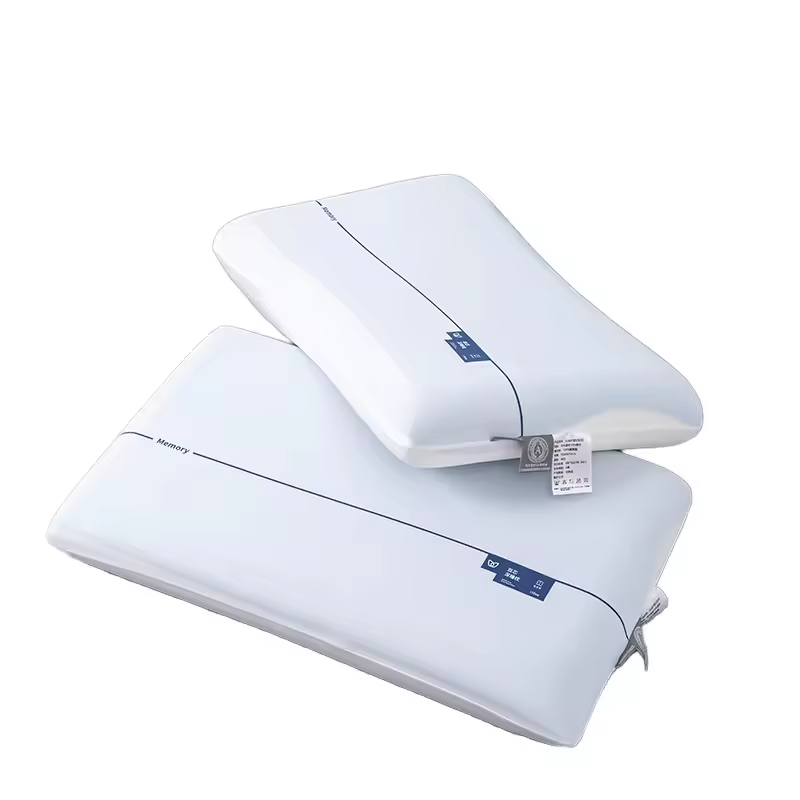
Compare adjustability honestly
Ask what adjustment actually means for the model. Rotating a contour pillow is different from removing fill from an adjustable pillow. Some products offer neither option. Do not open a sealed liner or cut foam to create an adjustment that the supplier has not designed.
Consider how often you want to make changes. If you prefer a consistent shape, a fixed design may be convenient. If you frequently change the amount or distribution of fill, verify that the product provides a suitable access system and clear instructions.
Check covers and pillowcases
A standard pillowcase can obscure a contoured profile if it is too tight or too loose. Ask whether the model includes a fitted cover and whether replacement covers are available. Confirm the care instructions for the cover separately from those for the filling.
For a traditional pillow, measure the finished dimensions rather than relying only on labels such as standard or queen. Size names vary between markets. A consistent measurement in centimetres or inches is more useful for matching cases and retail packaging.
Evaluate both on the same bed
Use the same mattress, bedding and ordinary position for both samples. Record how much you need to rearrange each pillow before it feels suitable. Notice whether the shape stays consistent and whether the cover bunches or pulls.
Do not compare a new contour sample with an old, flattened pillow and attribute every difference to contouring. Age, filling and firmness can all change the result. A fair comparison uses products in similar condition.
Questions for an order specification
- Is the filling solid foam, shredded foam, fibre or a combination?
- What are the dimensions and permitted tolerances?
- Can the orientation or fill be adjusted?
- Which cover and replacement-cover options are available?
- What care instructions apply to each component?
If you are developing a retail range, describe the actual shape and adjustment method in the listing. Avoid presenting one style as a cure for discomfort. Product selection language should help customers understand the construction and compare it with their own preferences.
Making a practical decision
Choose a contour design because you prefer its defined profile, or a traditional design because its particular construction suits your routine. Sample testing is more informative than a broad shape label. Neither format removes the need to check height, feel, cover fit and the way it works on your mattress.
Explore the relevant Suneco Plus products
View the Rectangular Memory Foam Pillow and compare the Sleeping Pillows collection. For model-specific dimensions, materials and current availability, send Suneco Plus your requirements before choosing a sample or placing an order.

Get Best Foam Products
Join Suneco Plus Newsletter to get more information of Foam Products


