

 By Mr.Sun
Contour pillow height usually describes the raised edges of a shaped pillow, but the number on a listing does not tell the whole story. The central recess, edge profile and compression under your head all contribute to the position you experience. Compare the high and low sides as part of one complete design.
Read the profile rather than one height figure
Request a side-view drawing showing both edge heights and the depth of the central area. Check whether the stated measurements are taken with the cover fitted. An unloaded height is a product dimension, not a promise of the height remaining during use.
Two pillows with identical maximum heights can differ in the width of their raised edges and the shape of the transition into the centre. These differences may be more noticeable than a small change in the headline measurement.
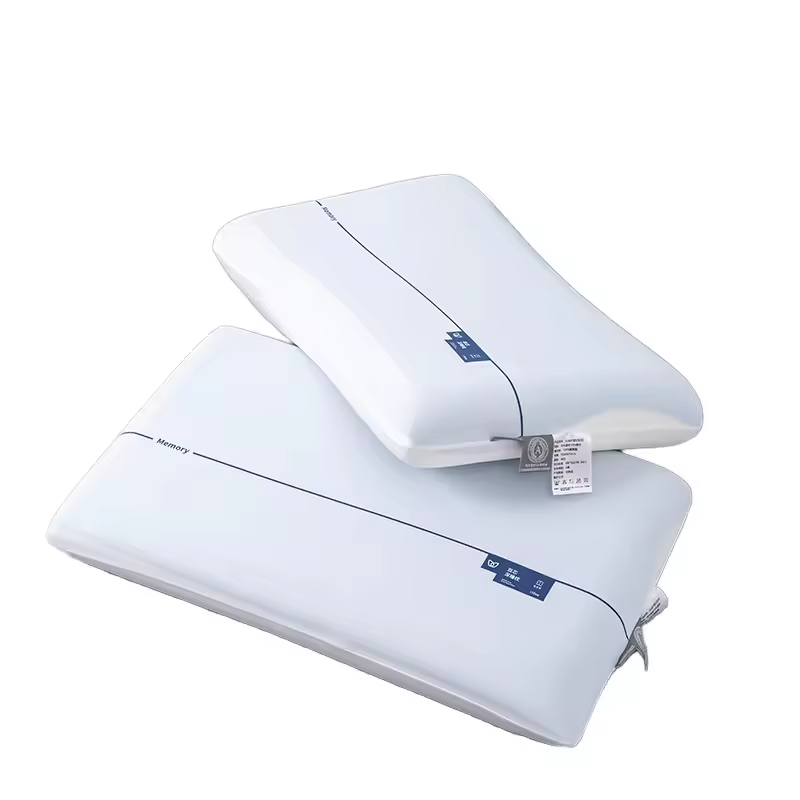
Check the intended orientation
Some contour pillows can be rotated to offer two edge heights; others have a defined orientation or asymmetrical construction. Follow the model’s instructions before turning it around. Do not assume the taller edge must always face your neck.
Keep a record of which side you try first. Change only the orientation during the next comparison, leaving the mattress and pillowcase the same. This makes it easier to distinguish a height preference from a change in the surrounding setup.
Include your mattress in the trial
The distance a pillow needs to fill depends partly on how you settle into the mattress. Testing on a rigid display platform does not reproduce a soft bed. Use the mattress and normal sleeping position that matter to you, and give yourself enough time to notice the feel without forcing an uncomfortable position.
Shoulder width alone cannot select a universal pillow height. Body position, mattress response and personal preference interact. If you have persistent discomfort or a diagnosed condition, ask a qualified professional rather than relying on a product height chart as treatment advice.
Compare the foam construction too
Ask whether the pillow is a single moulded piece, a layered construction or another design. A raised edge that compresses easily may feel lower than a shorter edge with a different firmness. The words “memory foam” do not establish those characteristics on their own.
Inspect the cover fit. A very tight cover can alter the contour, while an oversized one can bunch around the recess. Compare samples in the covers that will actually be supplied.
Use a short comparison sheet
- Record high edge, low edge, centre depth, overall length and width.
- Note the model’s intended orientation.
- Describe the mattress and pillowcase used.
- Write down where the shape feels too prominent or insufficient.
- Check whether the cover returns to the correct fit after removal.
For a private-label order, request the dimension tolerance and approve a physical sample rather than a drawing alone. Keep photographs of the side profile with a ruler visible, and identify the exact cover and foam combination in the approval record.
How to narrow the choice
Begin with two clearly specified samples instead of many poorly described options. Compare orientation, shape and feel systematically. The aim is to find a suitable complete pillow, not to identify one edge height that is universally correct for everyone.
Explore the relevant Suneco Plus products
View the Rectangular Memory Foam Pillow and compare the Sleeping Pillows collection. For model-specific dimensions, materials and current availability, send Suneco Plus your requirements before choosing a sample or placing an order.

Get Best Foam Products
Join Suneco Plus Newsletter to get more information of Foam Products


