

 By Mr.Sun
In a small playroom, a useful play couch arrangement leaves room to move and is easy to reset. Start with the product’s approved configurations and adapt the room around them. The objective is not to fill every corner with foam, but to make one area work well for several activities.
Draw the room before moving the couch
Measure the usable floor area, door swings and storage access. Mark fixed furniture and leave a clear route to the exit. Use the dimensions of the actual cushions on the plan; photos taken with a wide-angle lens can make a set appear smaller than it is.
Separate the play footprint from the tidy-up footprint. A set that fits against a wall as a couch may need much more space when opened. Decide in advance where loose pieces will go when that larger arrangement is in use.
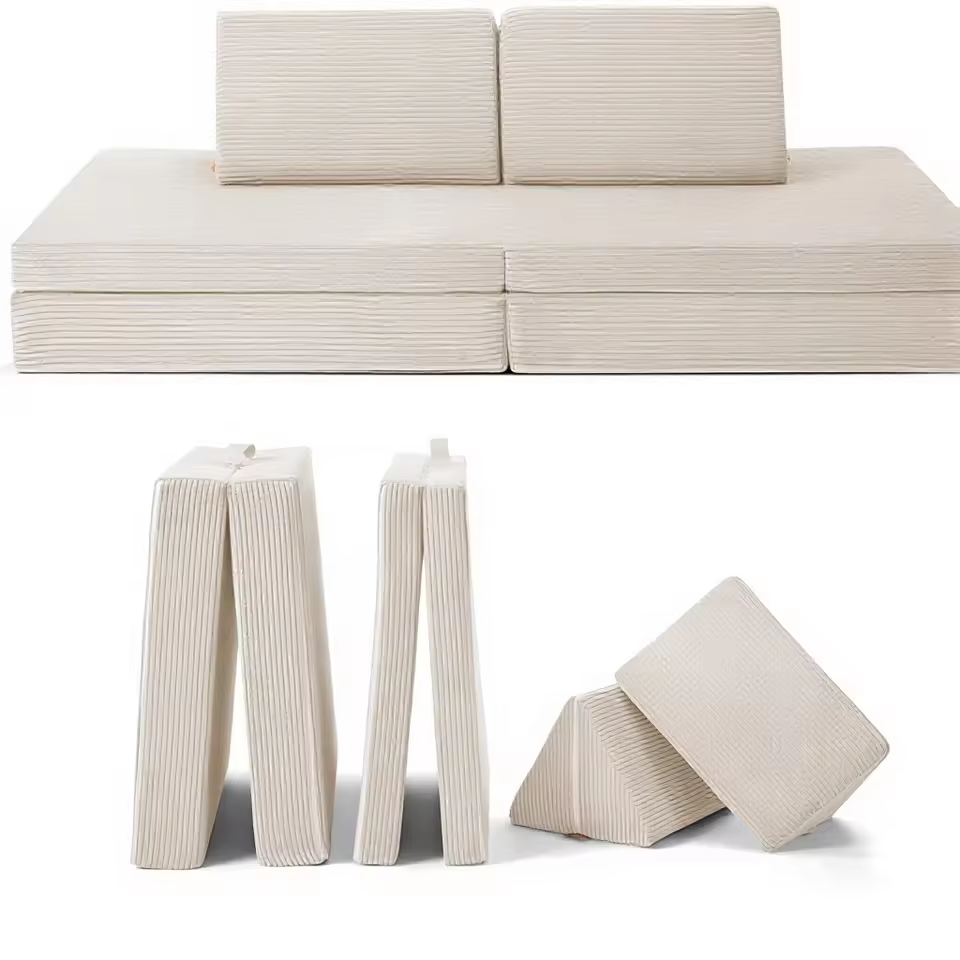
Idea one: a low reading corner
Use the standard couch configuration with its base fully supported and its back pieces arranged as instructed. Place books within reach so that the seating area does not need a large table. Keep storage units stable and follow their installation requirements.
Check that the seat depth works with the room. A deep base can be comfortable for floor-level lounging but may narrow the walking route. Rotate the whole approved arrangement rather than leaving a cushion projecting into a doorway.
Idea two: a flat activity area
If the manufacturer permits the bases to be opened flat, use that low arrangement for quiet floor activities. Keep the pieces level and remove objects that could create an uneven surface underneath. Avoid combining cushions into an elevated structure that is not in the instructions.
Store unused supports in a low, stable position nearby. The activity area should be easy for an adult to see and access. Foam surfaces do not remove the need for supervision or age-appropriate activities.
Idea three: two small seating zones
Where the design allows components to be used separately, compare a pair of low seats with a single long couch. This can leave a central route open in a narrow room. Confirm that each arrangement remains stable without relying on another piece that has been moved elsewhere.
Do not use an unsupported back cushion as a freestanding seat. The set’s documented component roles should determine which pieces can be separated safely.
Make storage part of the routine
Choose one repeatable reset arrangement and keep a photograph of it available. Label covers or components if similar sizes make reassembly confusing. Avoid high stacks that can topple, and keep the set away from heat sources.
Check the cover care instructions before choosing a fabric for a busy room. Being able to wipe a small mark and being able to machine wash a cover are different features. Confirm each separately rather than assuming all foam couches are maintained alike.
Before approving the layout
- Open and close every nearby door or drawer.
- Walk through the room with the couch fully arranged.
- Check adult access to every play area.
- Return the set to storage once to test the daily routine.
- Remove damaged covers or exposed foam from use.
Keep structures low, follow the supplier’s instructions and do not use a play couch for infant sleep. A simple layout that is easy to supervise and tidy is a stronger starting point than an elaborate build that overwhelms the room.
Explore the relevant Suneco Plus products
View the Modular Kids Play Couch and compare the Foam Sofas & Chairs collection. For model-specific dimensions, materials and current availability, send Suneco Plus your requirements before choosing a sample or placing an order.

Get Best Foam Products
Join Suneco Plus Newsletter to get more information of Foam Products


