

 By Mr.Sun
Wedge pillow height is only one part of choosing a comfortable incline. The length of the base, the width, the foam construction and the surface underneath all affect how a pillow feels. Two wedges with the same advertised height can create noticeably different resting positions.
This guide explains how to compare dimensions and angles before choosing a sample. It is intended for general comfort and product selection; if a wedge is needed for a medical condition or recovery, follow the positioning advice of your healthcare professional.
Start with how you will use the wedge
First decide whether you want a gradual surface for reclining, a more upright backrest for reading, or a configurable set for several positions. These uses place different demands on the shape. A photograph alone rarely shows whether the supporting surface will reach the part of your back you want to support.
Measure the available space on your bed or sofa, including the distance from the headboard to where the wedge will end. Consider whether you will use another pillow above it. An extra pillow changes the final position, so assess the complete arrangement rather than each item separately.
Browse the Suneco Plus support and wedge pillow range to compare single wedges with multi-piece designs before narrowing down dimensions.
Measure height, base length and width separately
Ask for a labelled dimension drawing. Suppliers may list length, width and height in different orders, and the long sloping face is not the same measurement as the horizontal base.
- Height: the vertical rise at the tallest end, measured on an unloaded pillow.
- Base length: the horizontal distance from the low end to the tall end.
- Width: the side-to-side space available for your body and arms.
- Sloping surface length: the distance along the inclined face, which may be quoted separately.
Keep all measurements in the same unit. If a drawing uses centimetres and a listing uses inches, convert before comparing. One inch equals 2.54 centimetres. Also check whether the stated dimensions include the cover and whether there is an allowed manufacturing tolerance.
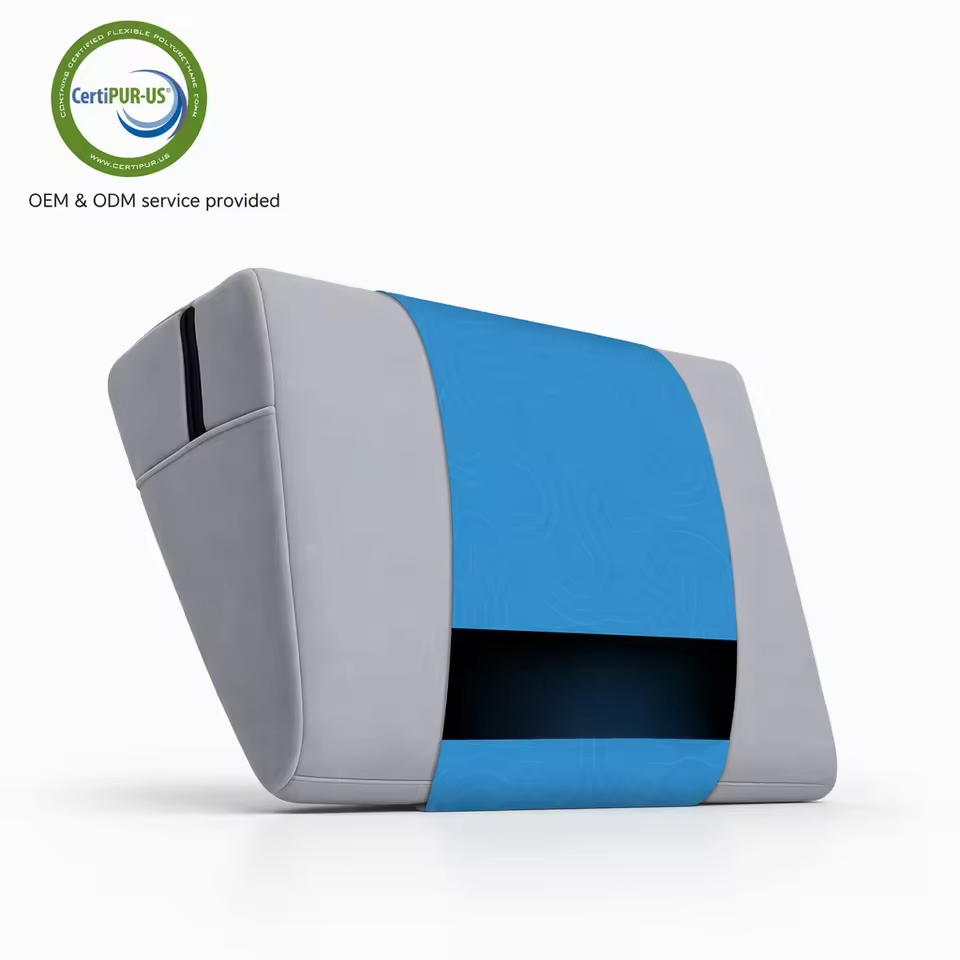
How wedge pillow height changes the angle
For an ideal triangular wedge, the incline angle is calculated from the vertical rise divided by the horizontal base length: angle = arctan(height ÷ base length). The important practical point is that a taller wedge becomes steeper only when the base length stays the same.
Here are three illustrative examples using a 60 cm horizontal base:
- 15 cm rise: approximately 14.0 degrees.
- 20 cm rise: approximately 18.4 degrees.
- 25 cm rise: approximately 22.6 degrees.
These are geometry examples, not Suneco Plus model specifications or recommended treatment angles. Rounded edges, a curved face, a raised lower edge and compression under load can all change the actual support surface. For a contoured design, request a side-profile drawing instead of assuming it is a perfect triangle.
A useful comparison is a 15 cm rise over a 60 cm base versus a 20 cm rise over an 80 cm base: both have the same theoretical angle. The second wedge takes up more space, even though its slope is unchanged. This is why choosing by height alone can be misleading.
Foam density and firmness are different specifications
A wedge that has the right dimensions can still feel too soft or too firm. Density describes mass per unit volume, while firmness describes resistance to indentation. The Polyurethane Foam Association explains that these are separate properties: a higher-density foam is not automatically a firmer foam.
For a layered wedge, ask about the support core and the comfort layer individually. A memory foam surface over another foam core is a different construction from a single-material block. Ask the supplier to identify the materials, layer thicknesses and the basis of any firmness measurement.
When comparing quotes, avoid treating words such as “premium,” “high density” or “extra firm” as equivalent specifications. Request numerical values where available and make sure the units and test conditions match. Most importantly, compare a physical sample in the intended position.
Single wedge or adjustable bed wedge pillow set?
A single wedge keeps the arrangement straightforward: there is one main shape to position and one set of dimensions to check. The Suneco Plus Memory Foam Wedge Pillow is one starting point for discussing an inclined support design. Confirm the available size and foam specification when requesting a sample.
A bed wedge pillow set offers separate components that can be arranged in different ways. That flexibility also means you need the dimensions of each piece, the overall footprint in your preferred arrangement and information about how the pieces stay together.
Do not assume that a multi-piece set will suit every chair or bed. Check whether it leaves enough seating space, whether the covers move against your bedding and whether you can reposition it conveniently. A simpler design may be easier to use if you always want the same setup.
A practical sample-checking routine
- Check the unloaded dimensions. Let a compressed sample recover according to the supplier’s instructions, then measure it on a flat surface.
- Try the intended setup. Use the same mattress, bedding and additional pillow that you normally expect to use.
- Assess contact and stability. Notice where the wedge supports you, whether an edge feels intrusive and whether the pillow shifts.
- Inspect the cover. Check seams, zipper access, fit and the care label. A removable cover does not mean the foam core is washable.
- Record the comparison. Note dimensions, construction and your observations so that a second sample can be compared fairly.
For a household purchase, comfort and fit should guide the final choice. For wholesale orders, retain an approved reference sample and agree on the specification in writing before production. Photographs are useful records, but they cannot document foam feel by themselves.
What to include in a wholesale wedge pillow enquiry
If you are comparing a China wedge pillow manufacturer or supplier, send the same requirements to each company. Comparable information is more useful than collecting the lowest price for products with different constructions.
- Intended use and a labelled drawing with height, base length and width.
- Foam construction, requested layer thicknesses and any available density or firmness requirements.
- Cover fabric, colour, zipper arrangement, branding and care-label requirements.
- Sample quantity, estimated order quantity and delivery destination.
- Individual packaging, compression requirements, carton dimensions and carton weight.
- Required product documentation for your destination market, with the specific model and materials identified.
Ask the factory to separate sample costs, product price, packaging and shipping in its quotation. Confirm what the quoted delivery term includes. Any available documents should be checked for their scope and relevance to the actual product; a generic claim is not a substitute for model-specific evidence.
Frequently asked questions
Is a higher wedge pillow always better?
No. Height must be considered with base length, intended position and available space. A steeper surface may be useful for one arrangement and uncomfortable in another. Choose through measurement and sample comparison rather than assuming that more height means more comfort.
Can I calculate the angle from the listed dimensions?
Yes, if the design is a straight triangular wedge and the listing clearly identifies vertical rise and horizontal base length. If it lists the sloping face instead, or the wedge has a curved profile, request a drawing before calculating.
Does memory foam tell me how firm the wedge will feel?
No. The material name alone does not describe the entire construction. Core material, layer thickness and firmness all matter. Compare samples and ask for the specifications behind the description.
What should I send Suneco Plus to get started?
Send your intended use, target dimensions, quantity and destination through the Suneco Plus enquiry page. Include a drawing or reference image if you have one, and ask for confirmation of the available construction before approving a sample.

Get Best Foam Products
Join Suneco Plus Newsletter to get more information of Foam Products


